

Transforming Google’s Global Legal & Privacy Ecosystem
Challenge: To architect a unified, global request framework for content removal across the entire Google ecosystem—including Search, Ads, and Maps. The objective was to replace fragmented legacy processes with a streamlined, legally compliant intake system that could handle the immense scale and sensitivity of global user requests.
Impact: Directed the research strategy for a new Internal Agent Review Tool, significantly reducing the cognitive load for agents and accelerating the time-to-resolution for users worldwide. My leadership in bridging the gap between user privacy needs and engineering constraints was recognized with a bonus from the team’s Engineering Manager.
Role: Staff UX Researcher
Process
Identifying Knowledge Gaps
Before initiating primary data collection, I executed a comprehensive Literature Review. This phase was critical for grounding the project in existing legal frameworks and ensuring a high research ROI (Return on Investment).
Assessing the "State of the Union": I synthesized research archives, historical accounts, and contemporary conference materials to establish a clear baseline of existing knowledge. This ensured that my subsequent work would build upon—rather than duplicate—established findings.
Identifying the knowledge gaps: By systematically mapping the available data, I identified critical gaps. These gaps became my primary research objectives for my ethnographic interviews.
Triangulation: This secondary research provided the necessary context to triangulate my findings, allowing me to validate user experiences against other documentation and policies.

Competitive analysis
I then conducted a comprehensive competitive landscape analysis, benchmarking removal workflows across the industry to establish global best practices for friction reduction and transparency. Simultaneously, I performed a systemic audit of Google’s internal request architecture, identifying critical inconsistencies across product silos that were hindering user trust and operational efficiency.

User interviews
Bilateral Research Strategy: I conducted 36 in-depth interviews across a dual-audience landscape: external users (global requesters) and internal operations (triage agents).
Workflow Transformation: Identified a primary friction point in agent verification, leading to the launch of an integrated Webpage Review Tool.
Systemic Impact: Simplified the internal work flow, ensuring that the 'supply side' (agents) could keep pace with the 'demand side' (user requests) with greater accuracy and speed.

Surveying
I architected a longitudinal UX measurement framework, utilizing CSAT and Ease-of-Use metrics to quantify the tool's performance. By benchmarking current sentiment against historical baseline data, I provided the team with a rigorous, data-driven narrative of our progress, allowing leadership to validate the platform’s impact on operational efficiency over time.
Service Blueprinting
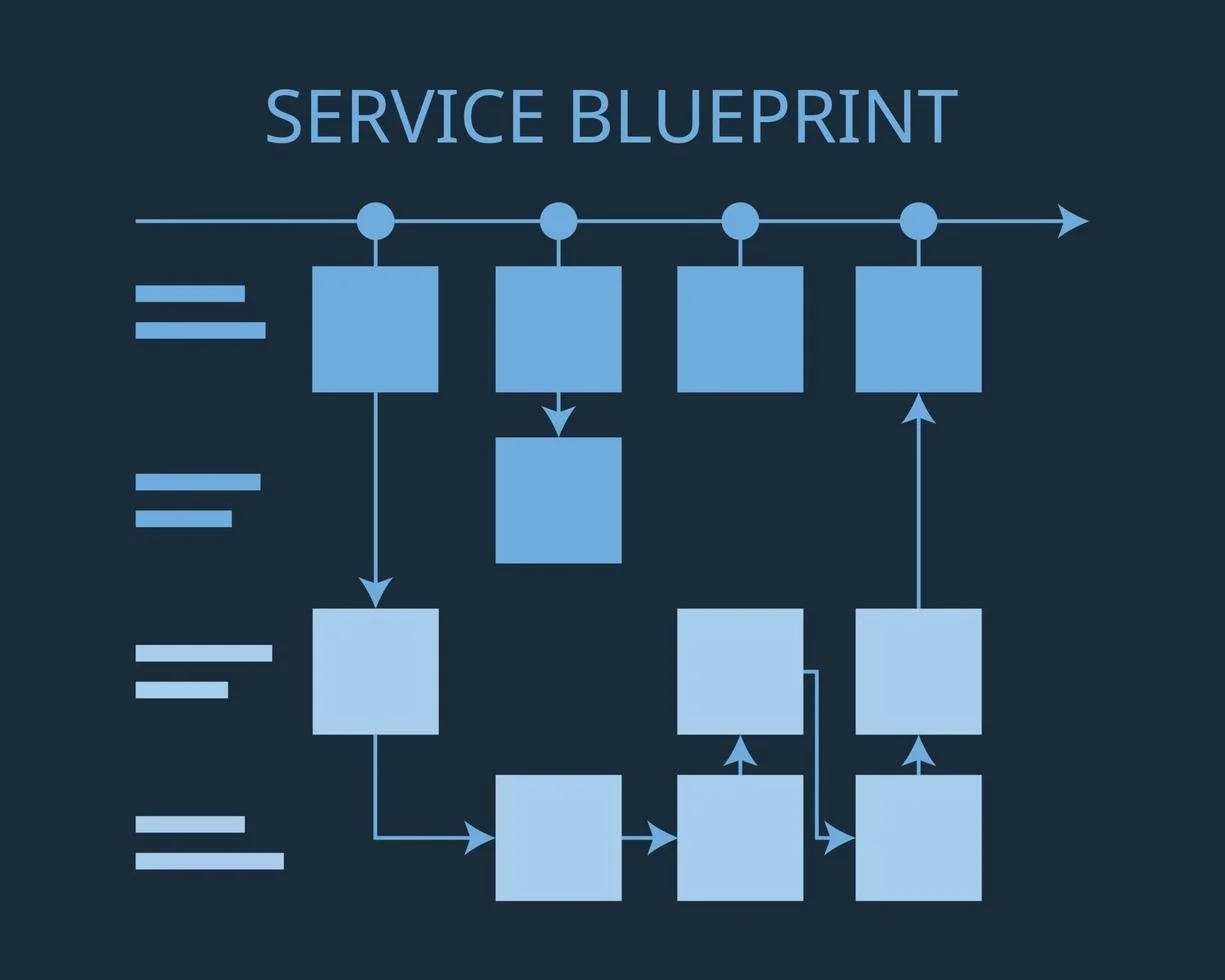
I developed comprehensive Service Blueprints in collaboration with UX Design that mapped the end-to-end request lifecycle, documenting the interplay between user tasks, tool dependencies, and systemic friction points.
Through a validation phase with global agents, I refined these maps to also identify automation and AI opportunities that would eliminate redundant manual workflows.
These Service Blueprints synchronized user behavior with evolving global legal mandates (GDPR, RTBF), ensuring the tool was resilient to regulatory shifts.

Workshopping
I led a collaborative ideation workshop with Design, Engineering, and Product partners to pressure-test improvement initiatives. By using a prioritization matrix that weighed user pain points against implementation feasibility, I helped the team move from a fragmented list of suggestions to a validated, high-confidence development plan.
Below are some kind words about my collaboration with cross functional team members, especially UXD:
““Megan has consistently delivered above-and-beyond since I’ve joined the Legal Requests team. In addition to concurrently running multiple UX research efforts, she’s always ready to jump into “spur of the moment” UX needs regardless of how ambiguous/time consuming they may be in an efficient and well-thought-out manner. Really appreciate the expertise in UX research you bring and your willingness to collaborate on the fly.” ”
Final Impact
Content removal is one of the most legally sensitive and human-centric challenges at Google. Through a combination of bilateral user research, longitudinal quantitative benchmarking, mapping end-to-end service blueprints, and facilitating cross-functional sprints, I moved the team from a "product-first" to a "journey-first" architecture.
The launch of the Webpage Review Tool not only simplified the daily lives of hundreds of internal agents but also ensured that Google could meet its global legal obligations with greater speed and transparency. This work stands as a testament to the power of UX research in de-risking engineering investments and protecting user trust.