

Elevator Pitch
History Now! is a location-based mobile experience designed for the curious traveler. It eliminates the friction of traditional research by automatically identifying and narrating the stories behind the places we pass every day.
Core Value Proposition: Leverage emerging geospatial technology to foster a deeper connection between people and their local history.
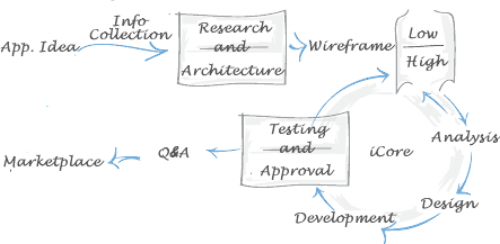
Development Process
Info Collection: Competitive Analysis
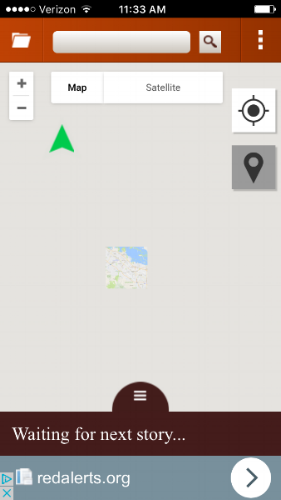
HistOrigin
By analyzing competitors like HistOrigin, I identified critical friction points that degrade the user’s historical immersion.
Technical Debt & Latency: The HistOrigin platform suffers from significant "Time to Content" (TTC) delays. For a location-based app where users are on the move, high loading times result in bounce rates as the digital experience fails to keep pace with the user's physical movement.
Intrusive Monetization Strategy: The presence of persistent footer ads creates cognitive friction and visual clutter. This breaks the sense of place that is vital for a historical or architectural app, signaling a misalignment between the business model (ad-revenue) and the user goal (immersion).
Heuristic Failures: The ad placement often competes with primary navigation, leading to accidental clicks and further frustrating the user journey.
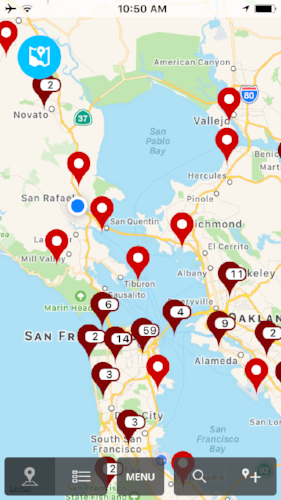
History Here
While History Here represents our primary competitor in the historical tourism sector, my analysis revealed a significant geographic bias in their content strategy.
The Gap: Urban Centralization: History Here focuses almost exclusively on high-traffic landmarks within major cities. This leaves a massive gap in suburban and rural areas where historical significance is often overlooked.
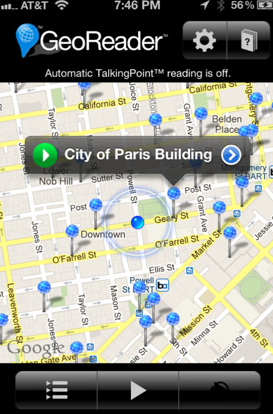
GeoReader
GeoReader lacks cross-platform parity. By failing to support legacy or diverse hardware (Samsung Galaxy S4, Nexus 7, Droid X) and failing to optimize for modern aspect ratios (iPhone 6 screen scaling), the app alienates a massive segment of the Android and iOS market.
Plus, frequent typos and empty data states (placeholders with no content) break the educational value of the app. In a historical app, accuracy is paramount. Poor quality assurance makes the platform feel unreliable.
Research: Survey & Analysis
Methodology
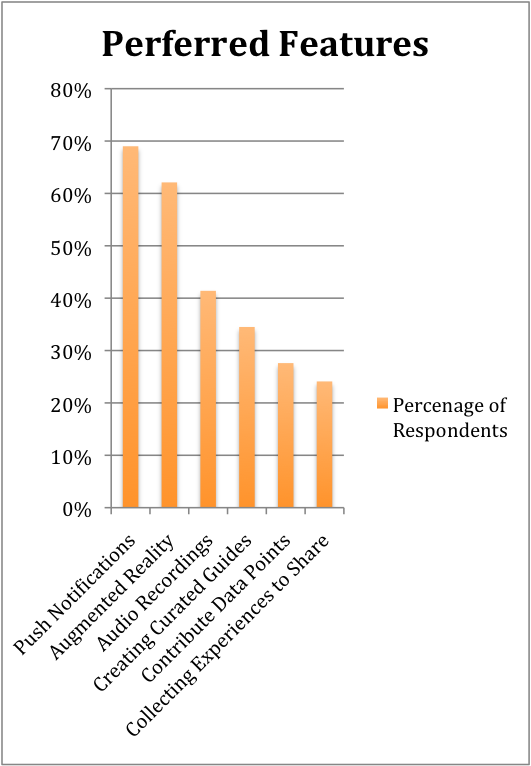
To validate the market viability of History Now!, I executed a two-phased survey strategy. This allowed me to triangulate data from both subject-matter enthusiasts and a broader consumer base to identify universal pain points and high-value features.
There were 29 total respondents.
Key Findings
Based on my research, I defined the primary user archetype and established the technical requirements for the platform's Minimum Viable Product (MVP).
Target: Adults aged 41–65 with a high affinity for historical and architectural context.
Psychographics: This group views travel and daily commutes as an opportunity for lifelong learning. They prioritize accuracy and depth over superficial engagement.
Accessibility Priority: Given the age range, prioritizing high-contrast UI and scalable fonts to ensure the interface remains usable for various visual needs.
The survey also revealed a near 50/50 split between iOS and Android users. To capture the full market, the app must not be platform-exclusive.
Lastly, the data identified two key features that will drive user adoption: Augmented Reality (AR) and push notifications. AR will allow users to "see through time" by overlaying historical blueprints or photos onto modern facades. Notifications automate the discovery process, alerting users to nearby history without requiring them to hunt for it in the UI.
Creating a Persona

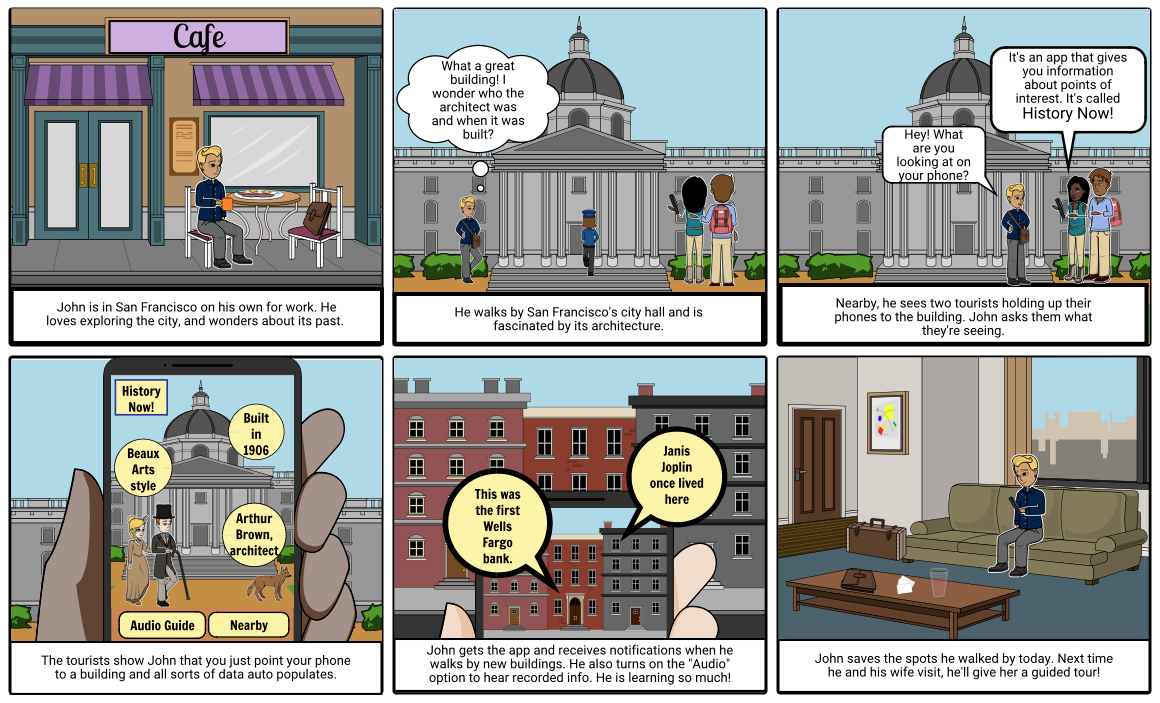
““San Francisco has such a cool past. I wish I could know the stories behind some of the places I’ll be passing by.””
John’s Scenario Storyboard
Prototyping & User Testing
Sketches
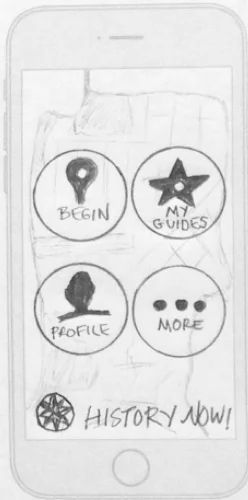
Before moving into digital design, I utilized paper prototyping to rapidly iterate on the flow. This allowed me to pressure-test the app's hierarchy and ensure that the transition from a passive notification to an active Augmented Reality (AR) session was seamless.
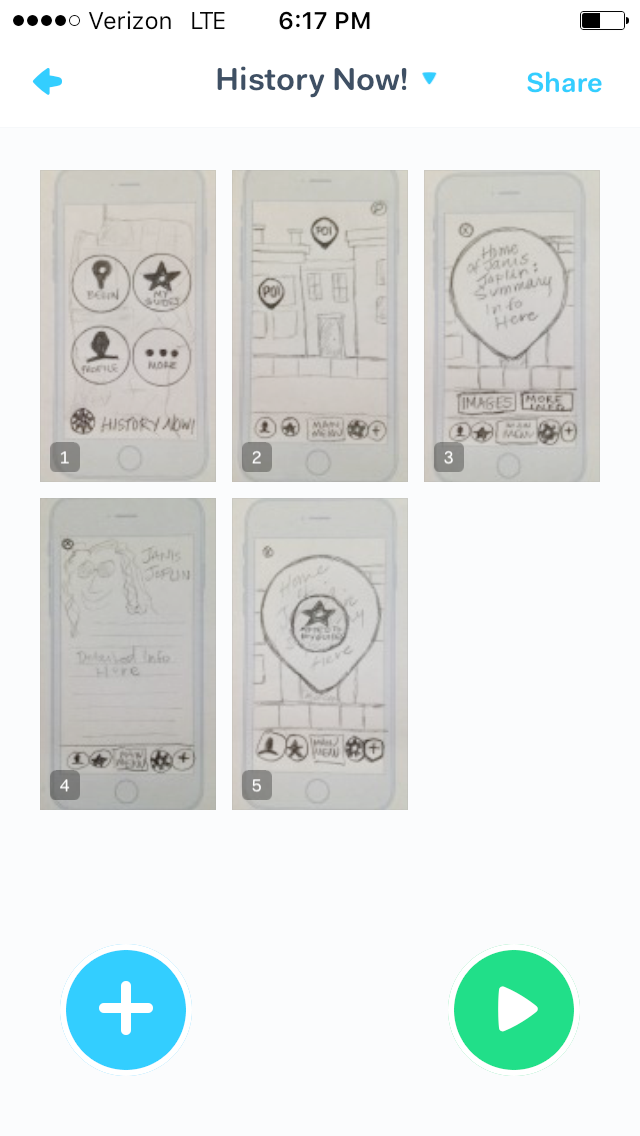
POP Prototyping
I transitioned my analog sketches into an interactive click-through prototype using the POP (Prototyping on Paper) app. This allowed me to simulate the tactile experience of the History Now! interface and observe how users navigated the spatial logic of the app in real-time.
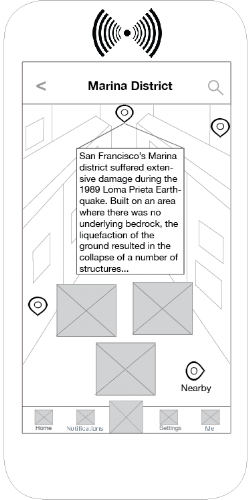
Lo-Fi Wireframes
Following the results of my paper prototype testing, I transitioned into low-fidelity digital wireframes. This stage was critical for establishing a consistent grid system and defining the interaction design patterns that would support a "heads-up" exploration experience.
Information Architecture
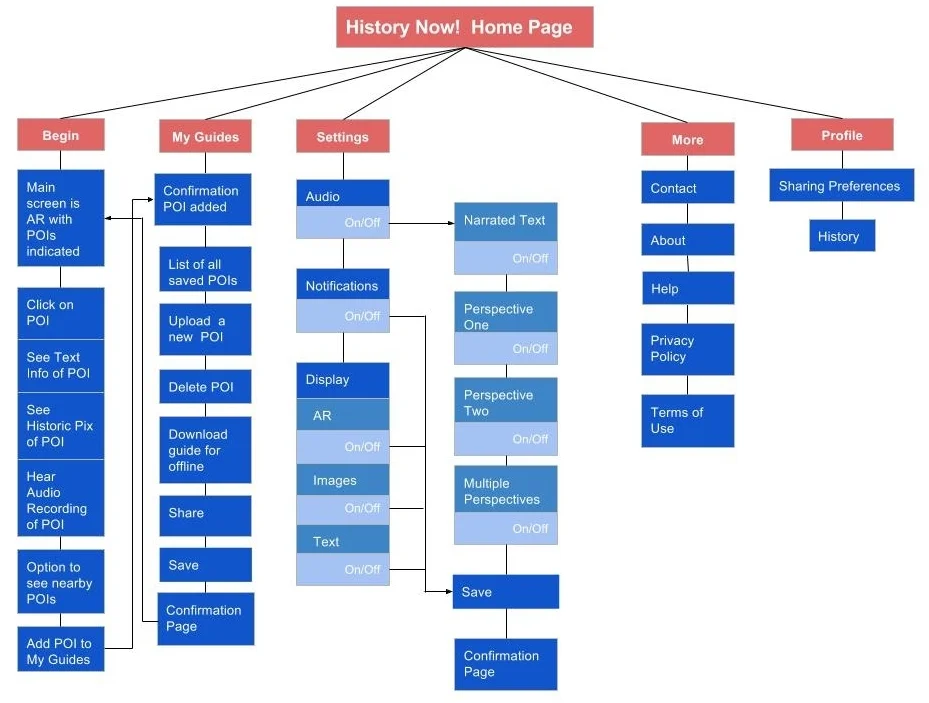
I structured the app’s architecture to support users’ discovery models. By mapping the hierarchy to specific user tasks rather than just features, I ensured that the most critical information is surfaced exactly when the user's physical context requires it.
Sample Hi-Fi Wireframes
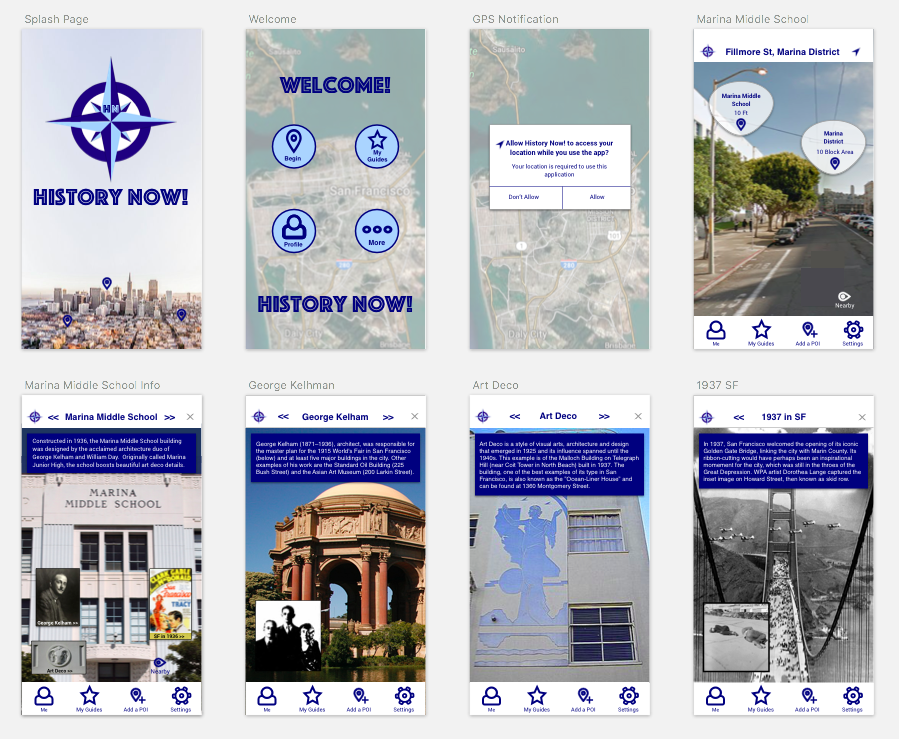
See a prototype of History Now! here:
Outcomes
History Now! transforms the urban environment from a series of passive structures into a living, interactive archive. By synthesizing geospatial intelligence with augmented reality, the platform provides a heads-up discovery experience that honors the user’s physical presence while deepening their intellectual engagement with their surroundings. It will offer:
Frictionless Discovery: By pivoting from a "Search-First" to a "Notification-First" architecture, we’ll reduced the barrier to entry for casual learners, turning every city block into a potential educational touchpoint.
Inclusive Accessibility: Transitioning from dense text to a multimodal Interface (AR + audio) ensures that the 41–65 target demographic can engage with history comfortably, regardless of lighting conditions or walking speed.
Technical Resilience: By prioritizing cross-platform parity and data integrity, the app will establish a high trust quotient, ensuring that users receive authoritative historical context on any device, in any location.
While history is often hidden in books or behind museum walls, History Now! puts the narrative directly into the hands of the traveler. The result is a more connected, informed, and curious public—proving that the best way to understand our future is to walk through our past, one street corner at a time.